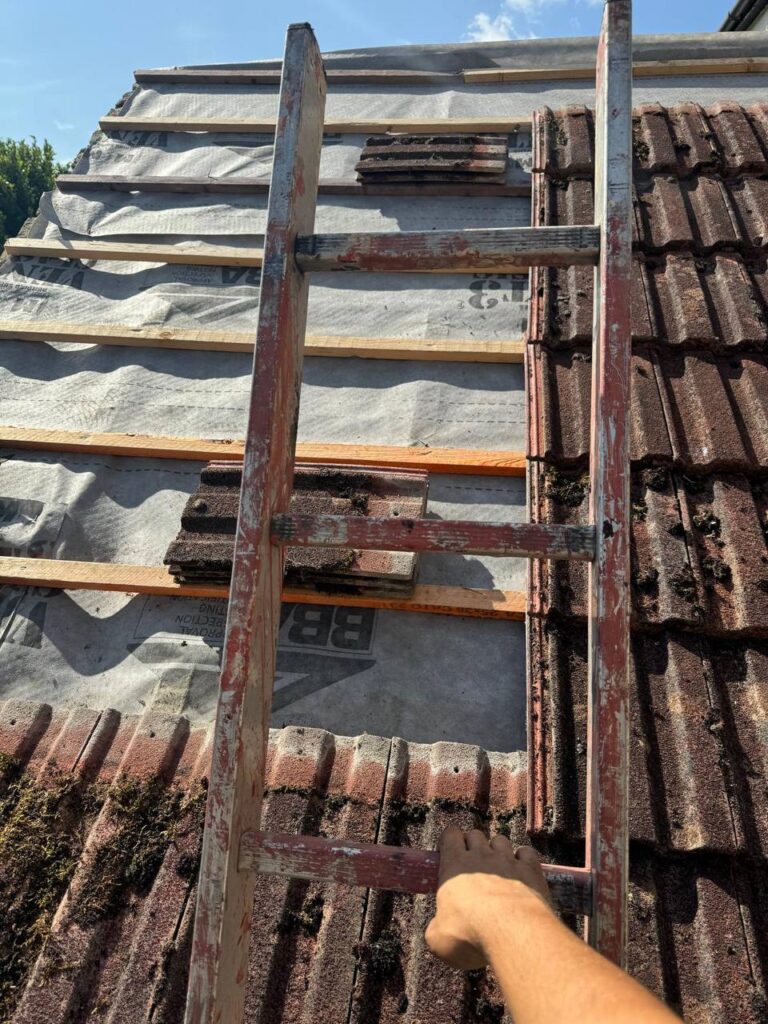
Most roofs experience occasional problems during their working life, and many of these can be resolved effectively through professional repairs. A slipped tile, a small area of damaged flashing or an isolated leak does not automatically mean that the entire roof needs replacing.
However, there comes a point when roofing problems are no longer isolated. When deterioration affects several parts of the roof, repairs become increasingly frequent or the underlying roofing system is no longer performing reliably, a new roof may be worth considering.
For homeowners in King’s Lynn, Norfolk, recognising the difference between a repairable defect and widespread roof deterioration can help with making the right decision. At King’s Lynn Roofing Services, we assess the complete condition of a roof before determining whether targeted repairs remain suitable or whether replacement provides a more comprehensive solution.
When Does Roof Repair Stop Being the Best Approach?
The decision is rarely based on one problem alone. What matters is the overall pattern of deterioration.
If most roofing materials remain sound and the defect is confined to one area, repair will often be appropriate. When several interconnected components are failing, however, continually treating each problem separately may no longer address the condition of the roof as a whole.
Here are eight problems that can indicate a new roof deserves consideration.
1. Roof Leaks Keep Returning
An occasional roof leak can result from a localised defect and may be straightforward to repair. Repeated leaks are different, particularly when water begins appearing in multiple locations.
Recurring water ingress can indicate that weaknesses are developing across a larger part of the roofing system.
Water can also travel after entering a roof, meaning the internal damp patch may not be directly beneath the original defect. If repairs have been completed but leaks continue appearing elsewhere, a broader assessment can determine whether several sections are deteriorating simultaneously.
Look at the Pattern, Not Just the Latest Leak
A single leak tells you where one symptom has appeared. A history of recurring leaks can reveal much more about the overall condition of the roof.
Where water ingress has become an ongoing problem rather than an isolated event, assessing the complete roofing system becomes increasingly important.
2. Tiles Are Deteriorating Across Large Areas
One or two cracked, slipped or damaged tiles can usually be considered individually.
The situation changes when significant numbers of tiles begin showing similar deterioration.
You may notice:
- Multiple cracked tiles
- Repeatedly slipping tiles
- Broken or missing sections
- Widespread surface deterioration
- Roofing debris appearing regularly below the property
When defects are spread across the roof, replacing individual tiles may address today’s visible problems without resolving the wider deterioration.
A professional inspection can establish whether the existing covering remains suitable for continued repair.
3. Repairs Are Needed More Frequently
Previous repairs are not necessarily a negative sign. Maintaining a roof properly often involves replacing worn components as they deteriorate.
What matters is how frequently new problems are developing.
If one repair is followed shortly afterwards by another problem in a different section, and this pattern continues, the roof may be reaching a stage where deterioration is becoming widespread.
At this point, it is worth asking whether repairs are preserving an otherwise sound roof or simply responding to one failure after another.
4. Ridge and Hip Areas Are Deteriorating Alongside the Main Roof
Ridges and hips are important parts of many pitched roofing systems and occupy particularly exposed positions.
Localised deterioration around these areas can often be repaired. However, if ridge or hip problems are occurring alongside widespread deterioration of the main roof covering, the combined condition may indicate a broader roofing issue.
A thorough assessment should consider how these areas interact rather than treating every component as an unrelated defect.
Where several important sections are deteriorating together, replacement may provide an opportunity to restore the roofing system comprehensively.
5. The Roofline Is Showing Noticeable Changes
A visible change in the shape or alignment of a roof deserves professional investigation.
Sagging, dipping or unusual changes in the roofline should not simply be treated as cosmetic concerns. They may indicate a problem beneath the external covering that needs to be properly understood.
This type of issue requires a different approach from replacing an individual damaged tile.
The cause should be established first so that the appropriate extent of roofing work can be determined.
6. Problems Exist Beneath the Visible Roof Covering
Tiles, slates or other external materials are only the visible part of a roofing system.
Depending on the roof construction, important components beneath the surface may include:
- Underlay
- Battens
- Roof timbers
- Supporting elements
When the external covering remains effective, these components are protected from direct weather exposure. Repeated leaks or widespread covering failure can allow moisture to reach areas beneath the surface.
If an assessment reveals that deterioration is no longer limited to the visible roof covering, more extensive roofing work may become appropriate.
Why the Condition Beneath the Surface Matters
Replacing individual external components will not necessarily resolve deterioration that has progressed deeper into the roofing system.
A new roof provides an opportunity to address the roof more comprehensively, including relevant underlying components rather than repeatedly treating surface symptoms.
7. Several Different Roofing Components Are Failing
One of the clearest reasons to consider a complete roof assessment is when several types of defect begin developing at the same time.
For example, a roof might have:
- Deteriorating tiles
- Recurring leaks
- Defective flashing
- Problems around valleys
- Worn ridge or hip areas
- Numerous previous repairs
Individually, many of these problems can be repairable.
When they occur together across an ageing roof, however, the combined pattern may indicate that the roofing system has reached a more advanced stage of deterioration.
Rather than deciding how to repair each defect separately, it can be more useful to determine whether the roof as a whole remains dependable.
8. Bad Weather Regularly Reveals New Problems
Wind and heavy rainfall often expose existing roofing weaknesses.
A sound roof should be capable of providing dependable protection during normal weather conditions. If every period of poor weather seems to result in another slipped tile, fresh damp patch or new area of deterioration, the problem may extend beyond isolated weather damage.
In some cases, bad weather has not created all of these problems. Instead, it is exposing weaknesses that have developed gradually over time.
If this pattern becomes established, a complete roof assessment can help determine whether continued repairs remain appropriate.
Does One of These Problems Automatically Mean You Need a New Roof?
No.
This is an important distinction. A roof should not be recommended for replacement simply because it leaks or has several damaged tiles.
Many roofs with localised deterioration can continue performing effectively after appropriate professional repairs.
A new roof becomes more relevant when the evidence points towards widespread or interconnected deterioration rather than one clearly defined defect.
The decision should therefore be based on factors such as:
- How much of the roof is affected
- The condition of surrounding materials
- Whether problems repeatedly return
- Whether underlying components have deteriorated
- Whether several sections are failing simultaneously
- The overall ability of the roof to provide dependable weather protection
Professional assessment provides the information needed to make that distinction.
Why a Whole-Roof Assessment Is Important
When roofing problems become frequent, focusing only on the latest visible defect can make it difficult to understand the bigger picture.
A comprehensive inspection can consider the condition of:
- The main roof covering
- Ridges and hips
- Valleys
- Flashing
- Roof junctions
- Previous repairs
- Chimney-related roofing details
- Accessible underlying components
- Internal evidence of water ingress
Looking at these elements together helps establish whether problems remain localised or form part of wider deterioration.
What Are the Advantages of Replacing a Widely Deteriorated Roof?
Where replacement is genuinely appropriate, the main advantage is the opportunity to address the roofing system comprehensively.
Rather than having numerous older sections alongside individual repairs, a new roof can provide a consistent covering with properly integrated details.
It also allows important areas such as junctions, ridges, hips, valleys and flashing to be considered as part of the overall installation.
The result should be a roof designed to work as one complete system rather than a collection of separately repaired areas.
A New Roof Still Depends on Proper Installation
Roof replacement should not be viewed simply as installing new tiles.
Long-term roofing performance depends on careful preparation and attention to every part of the installation.
This includes appropriate detailing around vulnerable areas, correct installation of roofing materials and consideration of how the complete roof manages rainfall and weather exposure.
Professional workmanship is therefore essential whether the project involves a focused repair or complete replacement.
Roof Repairs and New Roofs in King’s Lynn
At King’s Lynn Roofing Services, we provide professional roofing repairs and new roof services throughout King’s Lynn, Norfolk.
Our approach is to assess the condition of the existing roof and determine what work is genuinely appropriate. Where deterioration remains localised, professional repairs may restore the roof effectively. Where problems have become widespread and interconnected, a new roof may offer a more comprehensive solution.
The objective is not to replace a roof unnecessarily, but to recognise when repeated repairs are no longer addressing the condition of the roofing system as a whole.
Conclusion
Recurring leaks, widespread tile deterioration, increasingly frequent repairs, deteriorating ridges and hips, changes in the roofline, problems beneath the covering and multiple defects appearing simultaneously can all indicate that it may be time to consider a new roof.
However, no single warning sign automatically means replacement is necessary. The condition of the complete roofing system needs to be considered before deciding between further repairs and a new roof.
For homeowners in King’s Lynn, Norfolk, King’s Lynn Roofing Services can assess roofing deterioration and recommend an appropriate solution based on the actual condition of the property. If your roof is developing problems more frequently or several areas are beginning to fail, arranging a professional assessment can help establish whether targeted repairs remain suitable or whether it is time to consider a new roof.
Call us on: 01485 506 937
Click here to find out more about King’s Lynn Roofing Services
Click here to complete our contact form and see how we can help with your roofing needs.